

For the last twenty years I’ve had this recurring nightmare.
To this day, whenever I’m procrastinating in some aspect of life, something inherent in the AuDHD mind—whenever I put off a task necessary for survival to focus instead on the whims and instincts of my brain—it comes back. In my dreams, I receive a university letter that I actually failed my degree, and I have to fly back to Wisconsin to retake a semester of my four toughest courses as a forty-year-old.
It’s fucking scary; I can feel the tension in my body just typing this. The lifelong trauma is real.

I hated the school part of school. My first two years, I barely went to class while they regurgitated high school material. I received A’s and declared a math major.
I chose math because it sounded smart and I had no idea what I wanted to do with my life, except escape institutional walls, which brought me to making fake IDs and Photoshop and photography and the internet. It was the only way out available.
The irony though is that as the worst math major in the history of Wisconsin, I was more hireable to a traditional company with that degree than 99 percent of people in Wisco. And one of the first things my now wife noticed, the first time she came over to a BBQ, was the math degree on my wall (haha sorry dear!).

But if some company had the foresight to put me in a quiet room where I could take naps and get slightly stoned two days a week, not deal with hierarchy or hierarchical people, I could have obsessively made a hedge fund a lot of money. Business and economics are a dime a dozen versus math. Math is cool, but a math degree fucking sucks. And now AI is decimating the field’s income, funded by the business people. Thank God I got out when I did.
Suddenly my junior year, the classes went from hundreds of new students to twenty math nerds, and I could no longer hide in the back. Still I usually didn’t go. I came down with an autoimmune disease then.
Comp Sci was typically easier because you could always learn the material from the book in the dorms; I recall handing one professor my final as he asked, with a knowing and approving smile, whether I’d ever come to his class. I got an A. He was probably used to autistic kids. (My best friend, also ADHD, passed a Spanish class because he convinced his teacher he was slow, and now he’s a successful wealth manager.)

They say at the Beaux-Arts in France that you want to be the second student, not the one that gets the top grades and does the perfect work, but the one that flies below the radar without following the rules.
But I’d argue that further: schools and society could get a huge return by finding the last students, the ones at the back of the back, and giving them a track that works for their brains. And the top students are cool too, and the average ones. Well, some of them.
Math was a different story than Comp Sci—it’s a language in itself that needs slow cumulative study, my nemesis. It astounded me how suddenly in the advanced classes, numbers disappeared and were replaced by blobs, shapes, and hieroglyphics drawn on chalkboards by TAs from China with thick accents. Not that it mattered; I could barely understand the topics in perfect English.

I once passed a Math 475 combinatorics class because of Caro’s Book of Poker Tells, by the poker theorist Mike Caro.
A few primary tells I used to love: when someone sits forward and stares at you strongly, they are weak; if they sit back comfortably, they are strong; in Texas Hold ’em, when a flop hits, sometimes a person’s eyes will pause on a card they hit, so if you are watching when the three cards are placed, you’ll see their eyes briefly dart to it; and changes in speech patterns are a big one.
Each tell is of course context- and player-dependent, but there are all sorts of things. If someone clears their throat, it can mean they’re gearing up for a battle.

This last point helped me earn my mathematics degree, as I was hopelessly lost from not attending class. I recall futilely attending our final study session, knowing I probably had no hope of passing this time around.
That is until a fresh-faced Chinese teaching assistant (who we had never met) nervously appeared to give us the review, in poor English. Fuck; I wondered why I was wasting my time.
Then, shortly into the presentation, he cleared his throat in a slightly off way. It felt particularly forced and nervous, so I put a big asterisk next to the topic. Eventually, this happened again, and I thought, “Can this be?”

The only way I can describe the feeling is like the end of a vampire movie, when the hero is hopelessly lost and about to be consumed, until a tiny ray of dawn peeks through a window. Can it be?
Our professor stated there would be seven questions; by the end of the review, only seven of the many questions to study were starred with throat clears. I went for broke and memorized only those seven topics. I got my degree.
In the dream, however, I have an English class, a history class, a Spanish class, and the dreaded 600-level Advanced Algebra class (which in reality I passed because I emailed my professor that the class was insane and I just wanted to be a photographer and get out of this school in one piece). He did.

In the dream, I have good intentions each time, telling myself I’m going to work steadily, go, and do the work. But an unseen force stops me.
I take the classes and fail, lowering my overall GPA. So I have to stay and do it all again. I fail and fail, until the last time, where my GPA will go below a level that I can’t return from. Still I fail.
(For some reason I’m worried about this even though I’ve never needed a degree for my work. Although an MFA would probably make me more palatable to some people.)

Transitions are hard. (How’s that for a transition?) Especially for an autist who would like to eat the same thing for lunch every single day.
Out of the pandemic, I realized I was in a transitional part of my career and needed to get to work. Desperately. It was about survival. At forty years old, with health issues (thankfully fully fine at the moment) and an extremely physical job and an expensive life in an expensive city. The thought of breaking something has always terrified me.
And I always wanted to be a writer, artist, philosopher. You fucking name it. In three years, I wrote two 500-page volumes, edited to the point where not even Claude can find a misplaced comma or fact. Both books are fact-checked, with nearly 2,500 notes. Ninety-nine books went into the research.

I’m not going to share the name until I find a publisher, but volume 1 is a sprawl through self, city, and America. Volume 2 is about art and neurodivergence, ending with me learning that I was autistic and the extent of my masking. I was a mask without realizing it, and it was killing me—how others wanted me to act. Masking takes unquantifiable energy.
I planned to have this done a year ago, but it was three times the work I’d imagined (it always is). But in the survival process I also redid all of my business architecture behind the scenes. Everything’s modern and prepared for me to start moving fast—to shift up a level. And I created the digital gallery map of photo shows around the city.
I got my events, portrait, print-selling, and workshop businesses to at or near the top in each field. I added video to my offerings, which was terrifying. I started with interviews, working with the incredibly supportive and brilliant Miwa Susuda at Dashwood Books. What a legend, please visit Dashwood in NoHo to tell her something you’re interested in and watch her find some extraordinary books for you.

AuDHD people often have significant rejection sensitivity and imposter syndrome, so that’s why someone like me might try to have all their ducks in a row before taking new steps. And for me, in a row means to the millimeter.
I worked to figure out how to edit as fast as possible. Because it’s one thing to photograph and video a conference, and it’s another to have to hit their next-day edited photo needs and five-day video needs at the same time.
Or something like using gimbals to stabilize video. They are so awful to learn until you get it down, and it’s not just learn, but it’s learn to the level of what happens if you bump a button and it starts acting weird and you can’t figure out how to fix it for twenty minutes, which happened to me in the heart of an event.

(For these events, I’ll use two 5D Mark IVs, which I always buy used, with a backup, one with a 24-70mm and one with a 70-200mm, then a Canon R6 with a 35-or-50mm on a gimbal and an interview R6 camera on a tripod with some DJI lav mics, which are awesome.)
Taking a taxi from Brooklyn to Manhattan when it’s too much to carry, or like last night, a fifty-minute subway ride there and back, twelve blocks walking with a stand bag, roller bag, and shoulder bag, which I think about like it’s going to the gym.
I finished putting together and designing three long-term documentary projects, one a cultural history book, and a photography book that is meant as the introduction to the two written books.

I also trained as a writer with an incredible editor friend JG who will be embarrassed while reading this as he likes to stay behind the scenes. I gave him each chapter over the last three years and the history book, and he educated me on what I was doing wrong, the first chapters filled with red and both technical and incredible conceptual edits despite always telling me he was only focusing on the technical editing.
JG your conceptual edits are even better than your technical, crown yourself. In the sixty-seven-page conclusion, there was only one minor technical edit. He wrote:
“A note or two on ‘The New Pages’ file. As I stated throughout the text, your writing is far beyond the point of needing bug fixes. I noted that I now pretty much enter a flow state when reading your writing (the ultimate). What I like about it is your deeply personal, nonjudgmental, and unpretentious style. Even apart from the subject matter, your style will draw readers in. It’s difficult to turn away from someone who is baring their soul. As I stated in the markup, I found myself commenting on content, as opposed to bug-hunting. That was an unconscious transition, since years of editing have made it difficult for me to read for an author’s intended meaning if there are mechanical bugs in the text. Reading a buggy document is like driving a car with a flat tire to me.”

I’m going to bring back the group workshops very soon for next year. Probably three, maybe four. Who knows how many I can fill, but there’s pent-up demand. I lost my old workshop space when it closed down but found an even better one. And I’m going to redo my presentations for that.
And I created a community and school with eighty members, many around for six-plus years (we’d love to have you here). We have a zine challenge starting now.
There’s going to be regular columns here, which is going to transition to a variety of things but cover a lot about photography and art. It’s been impossible to write about those while doing the books, but now I’ll have the time. And I’ve been building a small library of photobooks (many used). I’ll be adding in online classes and presentations as well. This year has been all about me against the world, next year will just be about the world.

I don’t like the idea of treating photobooks like precious pristine objects. I love a cheaper used book that’s been loved, and when things are exorbitantly expensive they live in bookshelves barely used. (I used to search for used books in college that had been underlined by the best students. Then I’d raise my hand early in class and focus on those lines so the teachers would leave me alone for much of the semester.)
I’m also going to be leaning into doing the face talking/teaching thing on Instagram and TikTok. Yes, evil entities and I hate showing my face, but they do have discovery algorithms that mean if you make good content you can be found, so at least there’s that. And if I’m going to be an author, I’ll need to get on that grind.
And I have a system to write something and then edit it quickly. Writing this (with some parts taken from the book) took about three hours, and four to put it all together. Maybe five, I tend to sometimes underestimate, but you get the point. Automation is actually cool if you can stop it from destroying the environment, monitoring our every second, controlling bombs, and if you own your labor.

As I finish this book, as I finish diagnosing myself to figure out the root of my issues so I can heal, as I start to make changes step by step, land this plane (unlike our country recently), and try to navigate the world with this new knowledge—for the first time ever in this exhausting dream, I passed.
Am I a successful artist? Did my art heal me? Yes, it did. So yes, it is a success. But really it’s what I do with all this now that will define that.
But I never did this to be a success. I just literally wanted to belong. To be taught and to teach, and to create a vast and varied body of work that makes a difference in others’ lives. And is undeniable.

My whole life was people making me feel like I didn’t belong; the psychiatrist William Dodson estimates that by age twelve, kids with ADHD hear 20,000 more negative messages than their peers. And most of those come from neurotypicals. They shame you into masking, until you don’t realize you’re doing it.
My favorite artist is Basquiat. We can talk about him later, this is getting long, but he was also an AuDHD kid who wanted to belong in a world that didn’t accept Black people, just as they don’t accept the neurodivergent now.
He could draw and paint in such a classical way, he had an encyclopedic interest list, but he chose to paint like a child, hiding his poetry in his work and his classical skills under the surface. Throwing the idea of being primitive in the faces of those critics before they could hit him.

He’s famously known for his crown, which is now all over the Barclays arena in Brooklyn. They must have paid his estate a fortune (he’s buried in Green-Wood Cemetery, it’s worth a pilgrimage to his grave).
Nobody saw, and they still don’t see the obsessive work he was doing. They hate that he’s been commercialized everywhere though.
And they don’t see what you’re doing. They don’t see you behind the scenes working till midnight or 2 a.m. for twenty years obsessively, they dismiss you as naive or too excited or derivative. Never dismiss an artist if you don’t know their work and life intimately. Nobody knows you; you gotta make them know you.

Basquiat was always on the cutting edge, with his education, his cultural understanding, his use of new technologies, like the Xerox machine, he was in bands, he acted, wrote, did minor acts of vandalism. He was good to his friends.
People mistake his crown as being about being the greatest. American society especially thinks in terms of who’s great and who’s the best, but the crown was actually just him telling the world that he belonged.
His kind belonged. He deserved to feel comfortable in his ambition. It’s about confidence in a world that dismisses you, or worse, refuses to see you.

Art is transferable. Art and creativity is a transferable skill. I think the most interesting photographers and artists and writers have interests outside their fields. They take a holistic approach.
Like, they’re not interested in the good photo; they’re interested in what or who is in the photo first and foremost. And you can more easily and confidently jump from photography to writing to drawing to music once you’ve developed that part of your brain. And that part has been sucked out of our society with algorithmic cringe culture.
Anyway, cleanse those cringe thoughts from your soul and stay tuned for more. I don’t really know how to end this post to be honest. Hopefully that means this is a beginning. Stay tuned.
“I’m not an elitist artist, but an autodidact who would like to be part of the family of artists.”—Jean-Michel Basquiat
Links
ALEC SOTH – New American Photography (Ralph Goertz film)
Intimate and Political: Seventy Years of Japanese Women’s Photography
How Palestinian Journalists and Photojournalists in Gaza Became the Only Witnesses to Their Own War
Deutsche Börse Photography Prize 2027 Nominees Announced
Current Shows


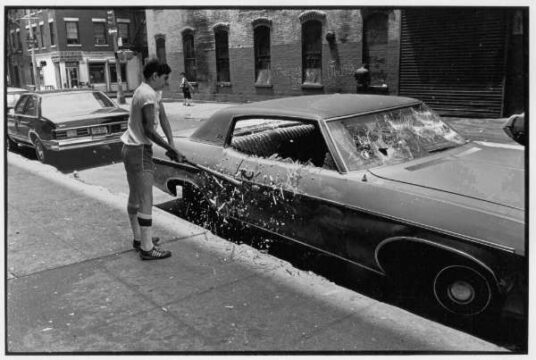
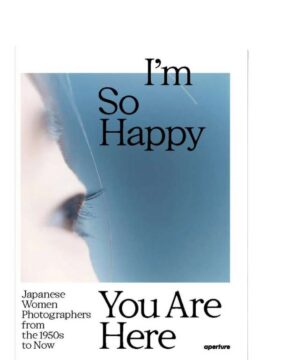


Upcoming Shows
Support Glass City
Glass City is free, and it always will be — no paywall, no ads, no algorithm.
If these issues have given you something — a photographer you now love, a city you look at differently — chip in $5, $10, or $25 a month, whatever feels right. Reader support funds a full day of writing every week: deeper essays, more photographers, more of the city.
Cancel anytime in a couple of clicks, no judgments — I’ve been there.
Or Get Something Back: Join the Salon
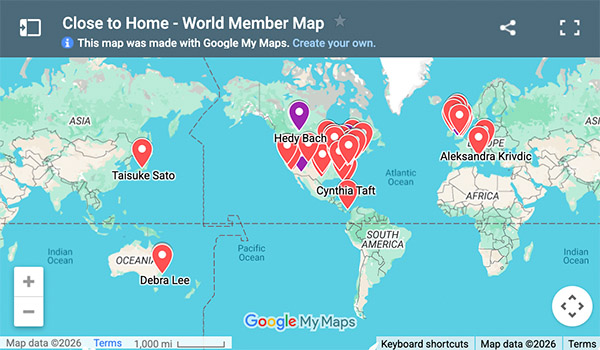
If you’d rather your support come with a community, join Close to Home, my online photo salon — photographers from all over the world becoming friends and getting to know each other through their work.
Zoom hangouts, photo book viewings, group challenges, and a member map to find photographers near you. No contests — the only thing we compete at is getting our cameras out the front door, regularly.
$10 a month, and the first month is free. It supports the column just the same — and you get new friends out of it.
Share this column
Every recommendation helps! If you know a photographer, a friend, or a camera club who might enjoy Glass City, please forward it along — word of mouth is how this column grows.
And if you’re new here, click below to subscribe!
Absolutely excellent – a really interesting and insightful article
Looking forward to the book
Thanks so much Chris!!
I’ve followed you for a long time, not always reading everything, but right off the bat, in this post you use foul language. It may be popular in the wider society, but has no place in your highly interesting and informative comments and suggestions – articles. It diminishes whatever vocabulary you already possess. I’m not going to cancel you, I’m just disappointed.
Hey Nancy, my apologies for the offense! I don’t mean to offend. But my goal is to write in my vernacular, the words as I think in my mind. For me saying Fing scary is not an offensive thing, just normal funny language. So I can’t say it won’t happen regularly, but just know I don’t mean to offend. For me, that language is not an offensive thing, so I hope you understand that through my lens!
Thanks so much for this newsletter, 146, James. I feel a kindred bond with you. I did not find out until the 12th grade English class that i had a learning disability with reading comprehension. I found out in the reading achievement tests given to 12th grade that I was far behind in remembering what I was attempting to absorb…..perhaps it was due to riding my bicycle behind that mosquito fogging machine that came down our street when I was 12 years old. DDT probably was what was sprayed throughout the streets, but it was fun at the time to dart in and out of the fog.
As I get older, it becomes increasing more difficult for this retired pharmaceutical engineer to keep up with the less-educated techno people and techno changes. I mostly photograph sports from my grandson’s games, but I think I am going to start some city street walks, just to see what awaits.
Thanks again
Hey Tom, thanks for this comment! My dad and brother both had/have dyslexia, so I know those struggles well! They are no easy, but for those who survive them they often go far in their career because what they do to make up for it far surpasses most of those who never have those struggles. But it’s never easy. And good to hear about your photography!
I can identify with having ADHD and learning disorder. I love photography and have taken pictures my whole life and only recently started sharing by email (since I hate social media and the addiction pathways they use). I was inspired into sharing a “picture of the day” by a friend I met out in Vancouver.
Being neuroatypical has been challenging in that I could never turn in a paper on time, never. Math and science was a haven. I could work probably 2 days without sleep on an analytical problem, but trying to write was so painful. Photography is an outlet to see and capture images. Figuring out to share with a larger audience is challenging and getting into the “competitive” arena intimidating.
Yeah finding one’s way and how they want to interact with the world with photography is such a tough thing to figure out. Whether it’s local or on the internet. And the neurodivergent problems and feelings of rejection sensitivity and struggles with productivity are super hard, especially when it should feel like a rewarding past-time or job. It’s tough to give advice in these situations as every person’s is different, but it’s a wall that will only come down through making small cracks over time.
The nightmares. Yes. I have them. Always that I’ve suddenly arrived at finals and haven’t attended a single class or done any homework. I’m terrified. I hate these nightmares but recognize they are how my brain shows me I’m stressed.
I’m not neurodivergent and I don’t think I have ADHD but I did have a mom who didn’t like me. I think I heard all the criticisms, but mostly from one person. Anyway, I can relate.
But mostly, I just want to say that this is the most fascinating, Faulkner-ish stream-of-consciousness writing I’ve read since, well, maybe ever. And it all makes perfect sense. Bravo.
Thank you so much for this compliment Denice, that will add more spirit to my day anything else! And these problems definitely exist for neurotypical people as well, the neurotypical world is also domineering on them, which is why it’s so important for everyone to learn the neurodiverse perspective. A world and understanding balanced halfway between the two would be so great to imagine.