


Workshops and Sneakers
I’m hosting a five person SoHo/Chinatown workshop on Friday, October 17th, $225 per person. 10:30-3:30pm and we’ll grab some lunch in the middle. Come hang! Reply to this email if you’re interested and I will send you the details.
Also, FYI I’m going to have a cool sneaker and print sale soon. In the research for Hype, I recently created a sneaker in a factory in China and have some individual sneaker ‘sculptures’ to sell. It’s going to be super interesting but I just have to organize it first. Expect that soon!


If you remember my torrid pace last year of posts, a big part of that was experimenting for this book I was planning to write. While I hoped to continue that hybrid this year, it quickly became clear I could only focus on one or the other.
The good thing is that I can now share little parts of the writing and chapters, particularly the aspects that deal with New York History.
This is the beginning of a chapter called Cats, Rats, and Hot Dogs, although this part only covers the cats and rats part, and not the hot dogs. Enjoy!
(And pardon, given that this is a written book, I don’t have the best illustrative photos for this essay.)

Chapter 10 (intro): Cats, Rats, and Hot Dogs
Not far from Sheep Meadow is my favorite place in Central Park, known as Cat Rock, a popular oasis for visitors, photos, and engagements—and because of its steep ridge, bouldering. With its proximity to the supertall towers, here you can see the true scale of these monumental feats of engineering.
Yet the most intriguing view is underfoot, the rock itself, the exposed Manhattan schist. Step back, kneel, and watch the glittering striations blend into limestone and glass above, a pure view of Manhattan’s supernatural forces. Cat Rock tells a story about Manhattan that stretches nearly half a billion years (the bedrock ranges from 190 million to 1.1 billion years old), a tectonic narrative of ancient continental collisions, glacial sculpting, and human involvement. Rocks that even the Tiffany’s five blocks south could gush over.
Manhattan schist is a geological marvel due to a volcanic island slamming into the eastern edge of (what is now) North America, pushing sediment to depths of 15-20 kilometers and subjecting them to 600°C and pressure five times greater than the deepest ocean trenches. These sediments recrystallized, creating sparkling, foliated schist, studded with reflective mica, garnet, and gorgeous quartz veins. Further tectonic shifts, including when Africa slammed into North America, forming the supercontinent Pangaea, pushed these deep rocks back to the surface.

These rocks and boulders were polished during the last Ice Age, known as the Pleistocene Epoch, a period of repeated glacial advancements and retreats of miles thick ice between 2.6 million and 12,000 years ago, most recently the Wisconsin Glaciation. If you look closely at the rock, you can view striations that mostly stretch north to south, revealing the southward path of the ice sheet that deposited smooth boulders around the park.
During the park’s development, Olmsted and Vaux designed their plans to showcase these polished bedrock outcrops as a central feature; and it is the bedrock itself that helped to shape the location of the skyscrapers. In Midtown and Downtown, where the schist was closer to the surface and more accessible, the strong rock provided an ideal foundation for these massive structures.
The folklore behind the name Cat Rock derives from a band of feral cats (fed by a mysterious man) that lived in the tall weeds and shelter of the schist. And make sure not to mistake Cat Rock for Umpire Rock a short distance away in the direction of Columbus Circle, also known as Rat Rock, named for swarms of rats that historically frequented the area. One can imagine the gory battles that must have occurred at night between these rocky outcrops.

Standing at the edge is a dizzyingly romantic view of the skyscrapers above and Wollman Rink below—a skating rink that would come to define the politics of an era.
During the 1970s, like the rest of the city, the famed Wollman Rink was in disrepair; a symbol of the era’s city mismanagement and government inefficiency. Closed in 1980 for renovation, and due to numerous catastrophic disasters, the project ran $12 million over the $4.7 million budget during a six-year period.
According to David Friedlander, “The rink’s renovation had begun poorly and turned disastrous. Rather than using brinewater as a coolant to freeze the rink, the parks commissioner elected to use Freon, a chemical used in air-conditioning units. The city was incapable of properly completing the complicated operation. A subcontractor underestimated the amount of concrete needed to pour the rink’s floor and so was forced to dilute the mixture. Design flaws left one part of the rink six inches lower than the rest. There was an ongoing feud between the Parks Department in Manhattan and its capital projects bureau in Queens. The project’s lead contractor was officially ruled in default, but by that point the principal of the company originally building the rink had been killed in a car accident en route to a company-wide getaway to Atlantic City, New Jersey, and the company subsequently disbanded.”

Both fans of the limelight, Trump and Mayor Ed Koch were having public disagreements over affordable housing tax abatements for several luxury projects in Manhattan, including a potential development called “Television City,” as well as Trump Tower on 5th Avenue. Trump sued and won, arguing that the housing policy was unfair to Manhattan development. At the time, the Queens native had yet to become a major player in the Manhattan scene, but it wasn’t for lack of effort.
“Trump and Mayor Ed Koch, of course, coveted exactly the same real estate—in front of microphones and TV cameras, and the front pages of the city’s tabloids. The city can be dominated by only one large charismatic personality at a time, and Koch was determined that it be the mayor,” wrote Jonathan Soffer.
While the major real estate families maneuvered behind the scenes, a 39-year-old Trump correctly saw the value of celebrity and a good old-fashioned media dogfight to get ahead. And that battle was Wollman Rink. Trump bombastically offered to complete the project within six months and for no more than $3 million. While Koch initially resisted, eventually his hand was forced. As David Freedlander wrote about Trump, “His battle with Ed Koch over Wollman Rink in Central Park still forms the core of his political identity.”

Trump finished the work two months early and 25% under budget. In reality, the project was already nearly finished and the typical delays caused with landmarks were removed as a condition of the deal. In addition, while the city had to hire the lowest bidder, a private business could hire more qualified contractors.
That was not the narrative the media wanted. According to Irwin Kula and Craig Hatkoff, “Trump learned that the press likes drama and extremes–positive or negative–and was hungry for every morsel about this otherwise insignificant project. Any milestone of the project’s progress resulted in press conferences often with ceremony, pomp and circumstance, and frequently, celebrity-filled. When concrete was laid: press conference. Construction complete: press conference. The first ice: press conference. The Grand Opening included Dick Button, Peggy Fleming and Scott Hamilton to name a few. Everything became an event and free promotion. City officials stopped attending press conferences because it was actually becoming an embarrassment. The rink which had been a perpetual money loser started making money immediately which Trump donated to charity.”
At the opening, Trump and Koch shook hands and complimented each other, with the Mayor loudly stating, “Donald, you performed a great public service,” and Trump saying, “no roadblocks were put up.” Due to the press (and the fact that it was actually open and working), the rink became a success. It was Trump’s first major political win.
This pivotal moment set the stage for Trump as both a cultural and political figure. Trump as the myth versus the man; a myth society so badly wanted to consume. Trump aggressively pushed any media opportunity he could, no matter the circumstances. On May 1st, 1989, Trump ran $85,000 worth of full-page ads titled, “BRING BACK THE DEATH PENALTY. BRING BACK OUR POLICE!,” two weeks after a jogger was raped in Central Park, Trump’s perceived domain. He positioned himself as a tough-on-crime businessman, and led media pitchforks against the “Central Park Five,” five Black and Latino teenagers, aged 14-16, who served between 6 and 13 years in prison before being exonerated. Trump refused to apologize in the aftermath.
NYC Photographs Shows List


Support Glass City
This column will always be free for all, but the goal is to financially justify a day a week dedicated to it.
$1, $5, $7 a month will help to improve the digest for all. Cancel here anytime in a couple of clicks, no judgments, I’ve been there!
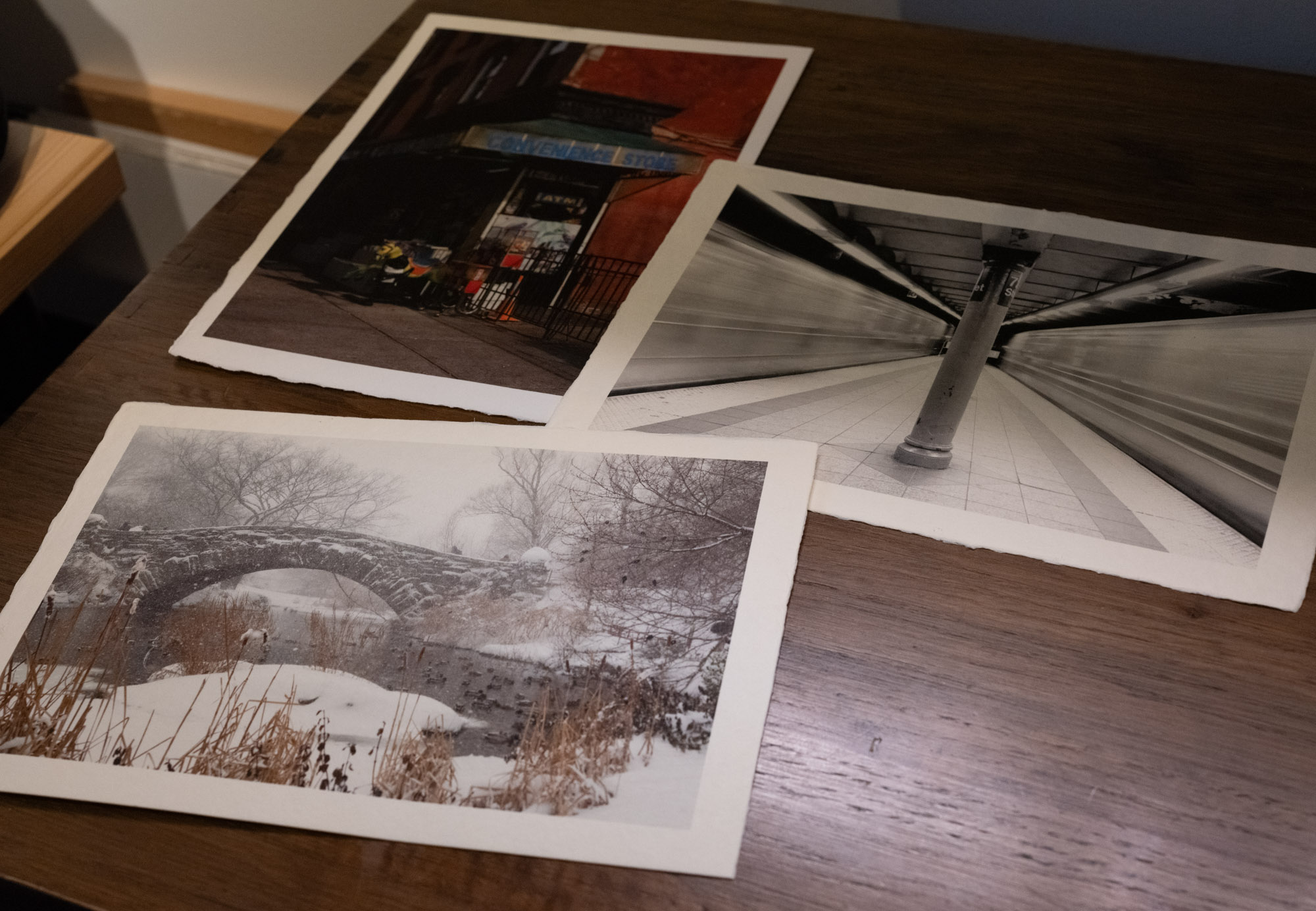
Or try the yearly print plan, with a limited print every year on special Japanese Bizan rice paper (Out of a choice of three options).
Share this column
Every recommendation helps! If you think a photographer friend or club might enjoy it, or the column as a whole, please consider sharing this link!
And if you are new and would like to subscribe to more, please click below!


Great content (and photos)! I remember these days well and had some interactions with Mayor Koch when I worked as a reporter in New York in the mid ’80s. He was quite a character (to say the least). I aklso remember the Wollman Rink saga and the good PR Trump received after completing the project. Good times!
Oh wow, Richard I had no idea you worked as a reporter in NYC! I’ll have to ask you about this the next time we speak, that’s amazing.